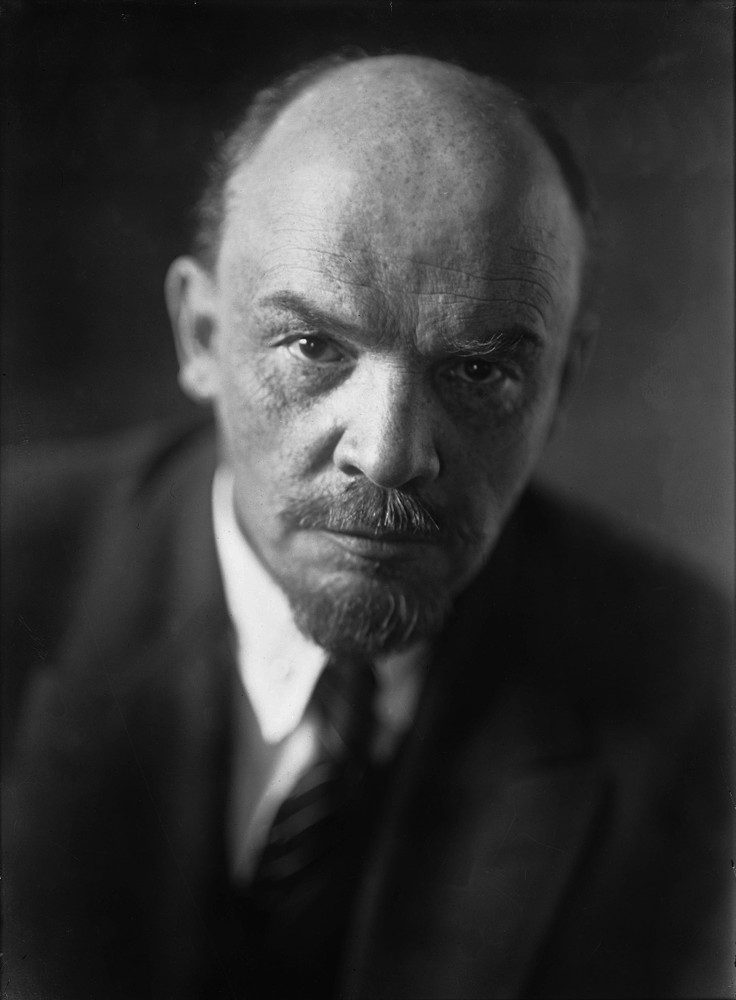
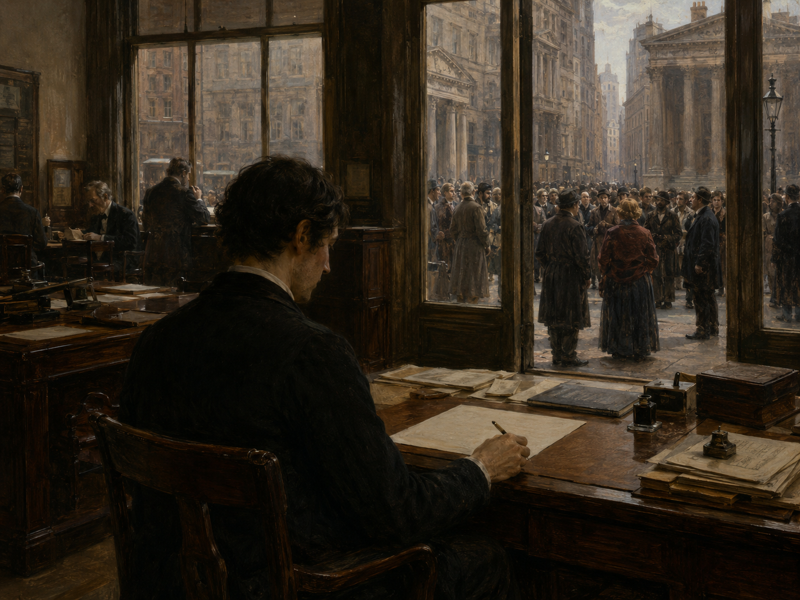
Herman Melville’s Bartleby is one of the most intriguing characters in literature, or, as the narrator (a lawyer in Wall Street doing business among “rich men’s bonds and mortgages and title-deeds”) called him, “a scrivener of the strangest I ever saw or heard of”.
As the story goes, this strange scrivener working at a lawyer’s office started by doing an “extraordinary quantity of writing” as if “long famishing for something to copy”. But as the time passes in the narrator’s accounts, Bartleby goes from refusing to examine his copies with the lawyer to do all that he is told, with a mild but always firm “I prefer not to”. He works relentlessly, writing and writing, never leaving the office, until he finally and permanently gives up copying.
The scrivener can be seen as a figure of our times, an image of the formless masses of today’s workers across hundreds of thousands of companies worldwide. But make no mistake. Bartleby may embody that alienation, the lifeless execution of repetitive tasks, but he maintains a rebellious if silent potentiality against hierarchical command and the power within that order, disguised behind an apparent disinterested ethos.
One could say that Bartleby personifies a reverse existentialism, for he acts as if unaccountable to the consequences of his acts but, at the same time, assumes an absolute grip over his will. Others could say that this incognito figure embraces Camus' absurdity to the fullest or that he is the reincarnation of Sisyphus, carrying a stone uphill for eternity. He could even be characterised as the stone, flowing according to the currents of our times, indifferent to the daily anguish of his peers. Conversely, we could also see in his denial a solid negation of the said flow. Nonetheless, whether we see indifference or something profoundly subversive in Bartleby’s conduct, it can be brought to the fore of our global zeitgeist by asking, ‘What is radically political in his I would prefer not to?’
The potentiality of the scrivener is to write and, simultaneously, leave the page blank. It is precisely in this nothing preceding creation that the experience of absolute potentiality can be found. Following Aristotle, all potential to be or do is always the potential not to be or not to do. Thus, Bartleby’s resolve emerges as the embodiment of the moment preceding creation. By neither rejecting nor accepting, he moves at his own pace.
“I buttoned up my coat, balanced myself; advanced slowly towards him, touched
his shoulder, and said, “The time has come; you must quit this place; I am sorry for you; here is money; but you must go.”
“I would prefer not,” he replied, with his back still towards me.”
The scrivener’s absolute potentiality lies in that space between being able to do and being able not to do, because it cannot be said of this strange figure that he does want, or that he does not want, to answer his superior's orders or to leave his office when fired or even when the office itself is sold. He simply prefers not to.
The potentiality that exists is precisely the potentiality that can not pass over into actuality (this is why Avicenna, faithful to the Aristotelian intention, calls it “the perfect potentiality” and chooses as its example the figure of the scribe in the moment in which he does not write). (Giorgio Agamben, Homo Sacer, Sovereign Power and Bare Life, p. 32)
Bartleby does not simply embody that perfect potentiality. He inhabits a particular office, sits at a particular desk, and faces a particular wall. The literary materiality of this situation —Melville's insistence on the physical arrangement of the space— is not incidental decoration, but the very structure of the exception made visible. The office on Wall Street is a space in which what is inside and what is outside, what is work and what is refusal, have become indistinguishable.
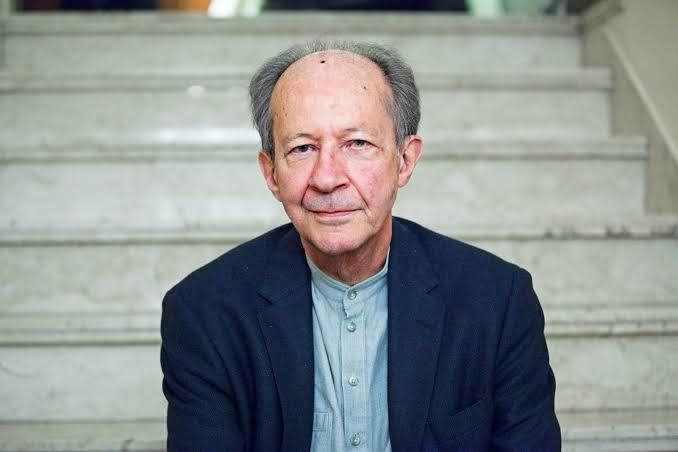 Giorgio Agamben
This formula has tremendous implications for the rule of the sovereign as well as for sovereignty itself, because the topos of sovereignty is found both in the legitimate will to rule and in the daily, continuous, deliberate, conscious, or simply automatic expression of citizens’ consent. In other words, the actuality of sovereignty (consecrated by constitutional law), at least in a formal democratic setting, resides at the cardinal point between the potentiality of wanting to rule (on the side of the powerholders) and the im-potentiality of not wanting to rule (on the side of the people that delegated power to the powerholders). This fragile equilibrium between two potentialities is, however, overruled if a constitutional dictatorship, a state of exception, becomes the dominant governmental paradigm. When constitutional law is constitutionally suspended, the liminality between potentiality of being and potentiality of not being assumes the form of sovereign violence:
As long as the state of exception is distinguished from the normal case, the dialectic between the violence that posits law and the violence that preserves it is not truly broken, and the sovereign decision even appears simply as the medium in which the passage from the one to the other takes place. (Giorgio Agamben, Homo Sacer, Sovereign Power and Bare Life, p. 42)
However, when the state of exception abandons its exceptionality and acquires the form of a rule, the line can no longer be located. In other words, when the threshold of that exception divides the included from the excluded, as if both were open and closed doors, sovereign violence must guide our political understanding.
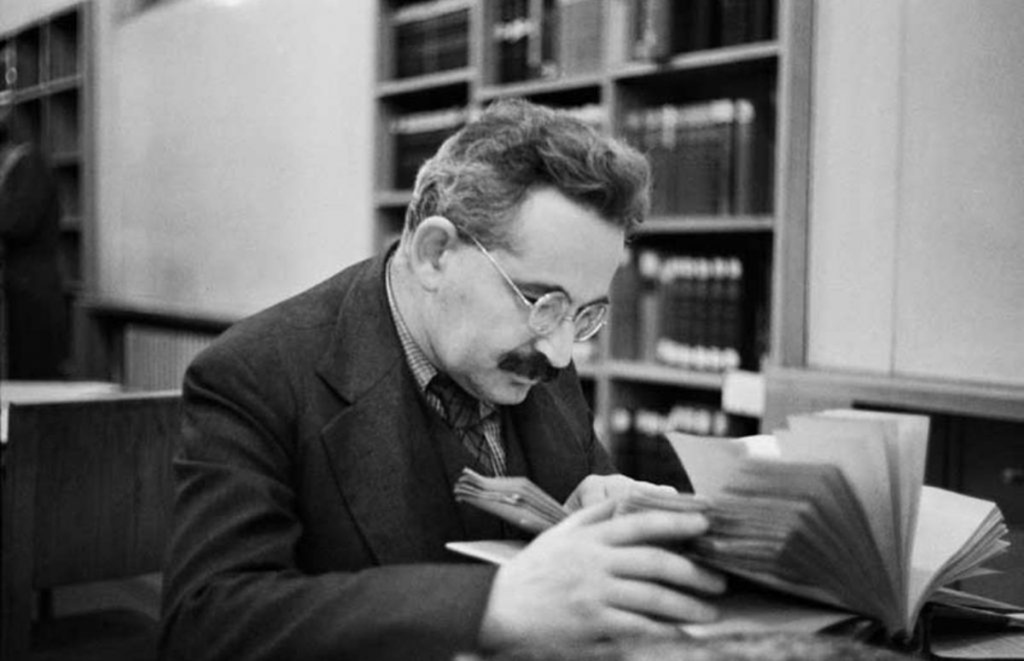
The tradition of the oppressed teaches us that the ‘state of emergency’ in which we live is not the exception but the rule. We must attain to a conception of history that is in keeping with this insight. (Walter Benjamin, Theses on the Philosophy of History, VIII.)
Could we say, then, that what is radically political in Bartebly’s conduct is his refusal?
Judith Butler's contribution here is to ask what this refusal costs the one who refuses, and who gets to refuse without paying that cost. In Precarious Life, Butler shows that the very capacity to mourn (to register loss, to have one's grief count as grief) is unequally distributed. The lives exposed to sovereign violence are precisely those whose deaths will not be grieved, whose refusal will not be legible as refusal but only as a further symptom of their unsuitability for political life. Bartleby's silence is read by the narrator as eccentricity, then as obstinacy, then as a kind of pathology. The scrivener is placed, like the Guantánamo detainee Butler describes, in a zone where neither the law nor its suspension applies to him in any recognizable way, where he is simply "detained," warehoused, finally sent to the Tombs.
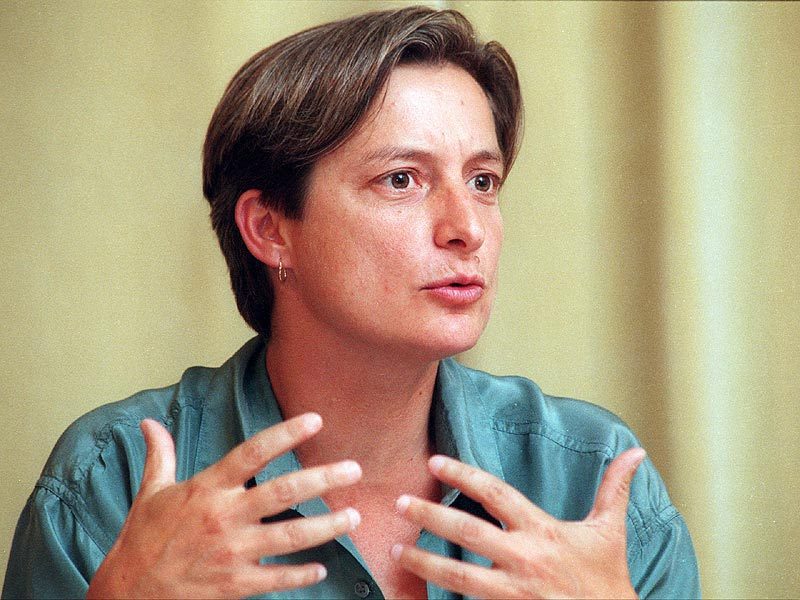 Judith Butler
What Butler adds to Agamben, then, is a theory of recognition: not every body that refuses is legible as a body that refuses. But Bartleby’s refusal is politically potent not because it founds a new community (it does not) but because it forces the narrator and the reader into the uncomfortable position of having to decide whether this life counts as a grievable life, whether this refusal counts as a political act, or whether both will be folded back into the mechanical operation of the office, the prison, the institution.
Maurice Blanchot offers a third angle on Bartleby's refusal that neither Agamben nor Butler quite reaches. In The Writing of the Disaster, he meditates on the figure of Bartleby directly:
Refusal is said to be the first degree of passivity . But if refusal is deliberate and voluntary, if it expresses a decision —though this be a negative one— it does not yet allow separation from the power of consciousness, and comes no closer to passivity than this act, of refusal, on the part of a self. And yet refusal does tend toward the absolute, independent of any determination whatsoever. This is the core of refusal which Bartleby the scrivener’s inexorable “I would prefer not to” expresses: an abstention which has never had to be decided upon, which precedes all decisions and which is not so much a denial as, more than that, an abdication. (Maurice Blanchot, The Writing of the Disaster, p. 21)
An abdication so thorough that it cannot be assimilated to any dialectical movement, not even the dialectic of resistance and repression. Bartleby, in this reading, does not resist sovereign power; he instantiates the remainder that exceeds every system of capture. Where Agamben sees in Bartleby the figure of potentiality and Butler sees the demand for recognition that power refuses, Blanchot sees something more unsettling still: a form of life so passive that it escapes even the grammar of political action.
In other words, what is radically political in Bartleby is not a heroic moment of refusal, which is always already captured by the language of sovereignty it opposes, but the quieter, more intractable moment when the body that was supposed to be manageable, governable, killable-without-mourning becomes, precisely through its passivity, an interruption. And sometimes that is what the beginning of politics looks like – a scrivener that holds the potentiality to write but decides not to, no more.
Keeping in mind the radical political content of Bartleby’s conduct, let me advance three arguments here. The first two are historical moments with empirical evidence of the contemporary blurring between exception and rule, or the exception-made-rule, and the third is a reflection on a way out of such problematic blurring.
The first moment starts with the storms following the 9/11 terrorist attacks: the Patriot Act issued by the U.S. Senate on October 26, 2001, and the March 20, 2003, invasion of Iraq, begun under false evidence of Iraq’s link to the 9/11 attack and to its perpetrators, al-Qaida, and which turned into a long war.
Two fundamental elements here that enable it to become a foundational historical moment. The first is the amplification and, I would say, banalization of stripping or suspending any form of legal and political status of the individual. What Agamben calls bare life, and Judith Butler designates unlivable lives. When an exceptional form of law takes the form of indefinite detention, in which the detained are neither prisoners nor accused, the rule of law is enacted as the absence of law.
As a result, the humans who are imprisoned in Guantanamo do not count as human; they are not subjects protected by international law. They are not subjects in any legal or normative sense. (Judith Butler, Precarious Life, p. 14)
The second element lies in another banalization: enacting the exceptionality of a state of emergency to pursue war under false premises and to attempt to drag the entire world into it.
Why should it be, for instance, that Iraq is called a threat to the security of the “civilized world” while missiles flying from North Korea, and even the attempted hostage-taking of US boats, are called “regional issues”? (Judith Butler, Precarious Life, p. 200)
In a recent essay, “Explaining the Irrationality of War,” Michael Mann lays out a historical continuum of irrational factors in decisions to go to war, from Ancient Rome to Vietnam, such as a projection of strictly economic benefits ignoring the cost in lives and wider ecological destruction or even the desire to keep status, honour and glory so common from medieval European monarchs through early modern rulers. More recently, World War One’s (ir)rationality was marked by the pursuit of geopolitical status and World War Two’s by a clash of ideologies as the fundamental disruption, which the Frankfurt School criticized as an ‘instrumental rationality’, and its reduction of human thought to calculation and domination, providing the fertile ground for the military-industrial complex of the time.
What is radically different after the 2003 Iraq war is a double absence: 1. The absence of legal status applied to the lives of detained individuals, rendering violence both inside and outside hollowed from any standard of internationally recognised law (inside because a state of exception gives it a framework, outside because that state denies it simultaneously). 2. The absence of empirically verified factors for war, being instead replaced by a war of narratives or, the so-called, post-truth.
This double-absence warmongering is located in the exceptional violence and false narratives commonly found in the following critical junctures: the 2011 Syrian Civil War, right after Iraq; the 2015 waves of refugees that turned the Mediterranean Sea into a mass grave; the destabilization of the region with the reinforcement of multiple terrorist groups, with ISIS being at the head; October 7 and the hundred-fold, or more, fatalities in Gaza – whose systematic pursuit and indiscriminate killings point clearly to a genocide.
The second moment is the post-pandemic reinvigoration of the global capitalist effort to accumulate through destructive extractivism. The sovereign writes off the conditions of its legitimacy to facilitate exceptional accumulation. If, for a brief period, the pandemic filled pages with promises of ecological reconciliation in the human-nature rift revealed by the climate emergency, they were soon debunked by a powerful punch from actually existing capitalism. The post-pandemic conflicts and wars, from the Russian invasion of Ukraine to the U.S./Israel attack on Iran, all have extractivist sectors, with minerals and energy at their centres.
All this is allied to an ideology in which unproven new technologies of carbon-dioxide removal, injected with the steroids of AI and its ‘tech bros’, promise to annul the paradox of infinite growth on finite resources. That paradox is even more exacerbated today, as shown by the post-pandemic levels of profiteering from fossil fuels extraction and trade, contrary to all the naïve optimism (which we now can certainly call so) for a post-pandemic future with radical changes in fossil fuel dependency:
Covid-19 put a damper on profits in oil and gas. As demand collapsed in April 2020 – aeroplanes grounded, roads empty – prices fell along a straight vertical line (…) [After the pandemic] The ‘big five’ – ExxonMobil, Chevron, Shell, BP, Total – all reported the largest profits in their histories. But none of these privately owned Western companies came close to the mightiest giant of them all: Saudi Aramco, profit of $48 billion for the second quarter of 2022. (…) This was said to be the largest quarterly profit ever posted by ‘a listed company in global financial history.’ (Andreas Malm and Wim Carton, Overshoot, p. 23)
Both figuratively and literally, we can draw a parallel between the unpredictability of today’s political events and the drastic, more unexpected weather events. The unfolding current era of storm after storm (in meteorology, multiple thunderstorms moving in succession over the same area are called a “train of storms”) has yet another major force behind it, that of placing us in a state of apparent non-agency in which we are merely affected spectators.
The third and last argument goes against that tide. It is a Bartleby-inspired reflection on the possibilities of turning spectators to this horror into a concrete resurrection of the political field, where a popular front of potentiality of being and not being is enacted and where agency, even if expressed by Bartleby’s abdication, is again possible.
It starts by looking at today’s sovereignty based on the exception-turned-rule and facing it with the potentiality of deciding to create; not just the potentiality of praxis but of poeisis as well.
But the strongest objection against the principle of sovereignty is contained in Melville's Bartleby, the scrivener who, with his "I would prefer not to," resists every possibility of deciding between potentiality and potentiality not to. (Giorgio Agamben, Homo Sacer, Sovereign Power and Bare Life, p. 33)
Perhaps more than at any time before, we need to decisively discuss what that potentiality could mean if acquired by the seemingly non-agentic spectators. The thought of incognito workers worldwide converted into an army of scriveners collectively rebellious by an I would prefer not to is not only worth entertaining but seems a lifeline for the return of agonostic politics as a field of conflicting, clearly stated and empirically verified arguments (not narratives) yet capable of re-imagining and scrivening future political alternatives of social and political justice, of peace and dignified life.
This scrivening would be a rebellion against the illusory offer of the AI-sanctified technocracy that has prevented political leaders from engaging in politics, sowing a vision of eternal growth under the banner of prosperity (“a golden age,” in the words of Mr Trump), whereas their constituents are brewing an indebted future and sowing hate to be harvested by far-right opportunism.
Seemingly against this rebellion, the answer from liberal democracy’s status quo, particularly the one that emerged from and consolidated social democracy’s belief in the possibility of taming the systemic expansive-dispossessing forces of capitalism, is but a simulacrum of politics happening under the guise of a consensus when it is in fact sustained by a single no-real choice scenario.
Social Democracy thought fit to assign to the working class the role of the redeemer of future generations, in this way cutting the sinews of its greatest strength. This training made the working class forget both its hatred and its spirit of sacrifice, for both are nourished by the image of enslaved ancestors rather than that of liberated grandchildren. (Walter Benjamin, Theses on the Philosophy of History, XII.)
In the topos of our politics, decision-making power situated in national legislative bodies has been appropriated by the unelected and technocracy-crowned. The be-coming community of alternative futures is one that collectively scribes against the decrease of public space (the sphere of socialisation par excellence) paving the way to stop the collective from being completely privatised under the guise of individual liberty.
This community also collectively scribes to its potentiality for a democracy in which its natural antagonisms cohabitate, capable of activating a politics in which alternatives are truly in dispute. Here, coming and becoming are one, a movement that comes to be by becoming what is yet to be written. Creating by annulling the void of inaction, incomprehension, and profound feeling of impotence in which we are stranded.
In a well-known reflection about how sovereignty is exercised through death and fear – which can hardly be denied when taking into account the era of terror since 9/11 – Achille Mbembe finds inspiration in the work of the Nigerian writer Amos Tutuola’s The Palm-Wine Drinkard and My Life in the Bush of Ghosts, referring to the production of life as movement, a wandering subject creating in a radical instability:
With life's contours barely sketched out, the wandering subject must escape from himself each time and allow himself to be carried away by the flux of time and accidents. He produces himself in the unknown, by means of a chain of effects that have been calculated beforehand, but never materialize exactly in the terms foreseen. It is thus in the unexpected and radical instability that he creates and invents himself. There is thus no sovereignty of the subject or life as such. (Achille Mbembe, Life, Sovereignty, and Terror in the Fiction of Amos Tutuola, p. 23)
As such, I cannot stop thinking, coming back to the initial exercise, that Bartleby and his absolute potentiality represent a force capable of leading such a political event which could not only lead the coming multitude-yet-to-be-aware-of-itself, but also a be-coming community following Aristotle’s idea of change as one of genesis. Not unaware of this messianic vocation of the character, Agamben wrote, ‘But if Bartleby is a new Messiah, he comes not, as Jesus, to redeem what was, but to save what was not’ [yet taken place].
It could well be that this community is the one capable of facing the Empire by voicing, without a wrinkle of agitation, I would prefer not to, resurrecting the possibility of the political and thus the possibility of change.